Buyer information, not installation instructions. Requirements depend on the adopted local code and exact product. Electrical work and site diagnosis should be performed by qualified professionals.
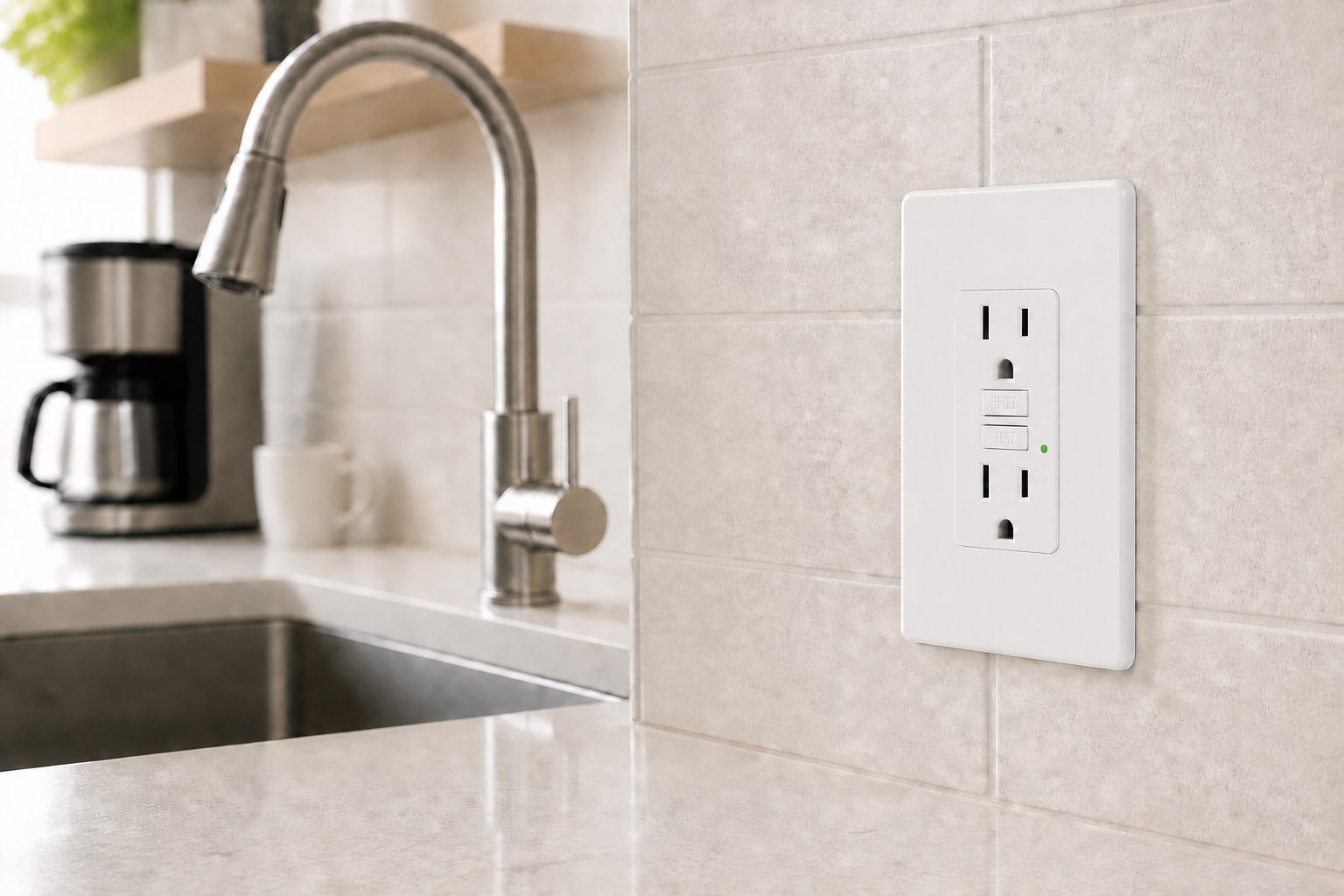
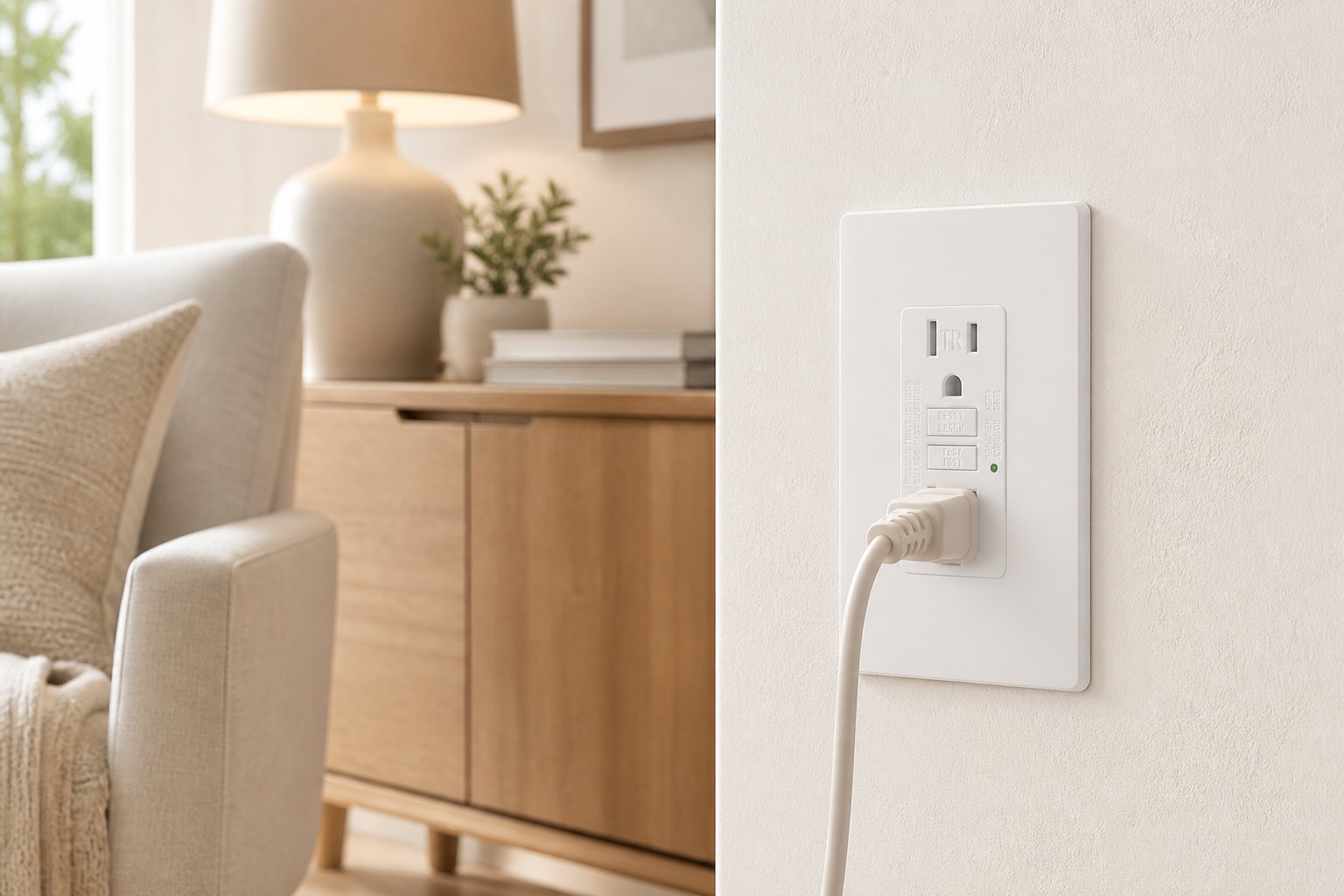
Tamper-resistant (TR) receptacles use shutters to restrict access to the contacts. TR belongs in the specification alongside the electrical rating and any other required protection. It is a separate feature from weather resistance and GFCI protection. [Source]
GT20 or RT20?
These two FAHINT models show why the complete designation matters. GT20 combines tamper resistance with GFCI protection. RT20 is a tamper-resistant duplex receptacle without an integral GFCI function.
If the project calls for a TR receptacle with integral GFCI protection, GT20 is the relevant model to review. If GFCI protection is provided elsewhere, have the project’s electrical professional review the circuit arrangement before selecting the receptacle.
Check the project requirement
Section 406.12 of the 2023 NEC covers 15A and 20A, 125V and 250V nonlocking receptacles in specified residential and other occupancies. The scope extends beyond children’s rooms. The locally adopted edition, amendments and applicable exceptions determine the requirement for the site. [Source]
Record the voltage, current rating, NEMA configuration and required TR, WR and GFCI features on the purchase order. Match the model markings and documents to that list.
Then approve the device finish and wallplate together. Keep the complete model and sample reference for reorders, so a cosmetic substitution also receives an electrical-specification check.
GT20 and RT20: same shutter, different product
Both model names carry the T that means tamper-resistant, and both are 20 A. They are still two different products. GT20 is a GFCI receptacle: it provides ground-fault protection and shuttered slots. RT20 is a duplex receptacle with the same shutters and no ground-fault function. A purchase order that says "TR receptacle 20A" has not yet chosen between them.
The distinction changes the price, the document and the circuit. If the location needs both protection and shutters, the GT or GW family is the one to quote. If it needs shutters only and the protection sits upstream, RT20 is the cheaper and correct answer.
Written properly, the line reads as the family, the rating and the feature set: GT20 for a protected 20 A location, RT20 for a shuttered 20 A receptacle on a protected circuit. Two letters apart, two different documents behind them.
Where TR is required and where it is only a preference
Tamper resistance is a code requirement in specified occupancies, not a universal one. Dwelling units are the obvious case; the scope in the adopted edition, plus local amendments, decides whether a given commercial space falls inside it. That determination belongs to the specifier, and it changes the price of a receptacle line by a noticeable margin.
Mixed projects are where this gets practical. A building with residential floors above a retail podium may need shuttered devices upstairs and plain ones in the back-of-house areas. Ordering the whole job with shutters is simple and more expensive; ordering by location type is cheaper and needs a schedule that says which is which.
The visual argument for uniformity is real — the same face across a project looks deliberate. It just should not be the deciding argument. Where the requirement is location-based, splitting the order by location keeps the appearance consistent in the areas anyone sees and the cost where nobody does.
One last pairing mistake: shutters do not make a device weather-resistant, and a TR device in a wet location still needs the correct enclosure and cover. RT15 and RW15 differ by that W for a reason, and the order line should show it.
Sources & further reading
Reviewing a specific model?
Send the model and the question you want to resolve. We will help locate the relevant product information.
Ask a product question